Why organizing your pantry is worth it
A messy pantry isn’t just an aesthetic problem: it makes you buy duplicates, miss expiration dates, and reach dinner with no ideas—even when the fridge is full. You don’t need a full weekend. With a clear method, 15 minutes is enough to build a solid base and start fresh.
The method: 3 blocks of 5 minutes
1. Empty and decide (5 minutes)
Pull out only what you can see on one or two shelves (not the whole kitchen). Sort into three piles:
- Keep: sealed, in date, you actually use it.
- Cook this week: opened, nearing expiry, or forgotten for too long.
- Toss or donate: expired, opened for months, or something you’ll never eat.
Simple rule: if you wouldn’t use it in the next 7–10 days and it isn’t a stable staple (pasta, rice, legumes, oil), put it in the “cook this week” pile.
2. Group by use (5 minutes)
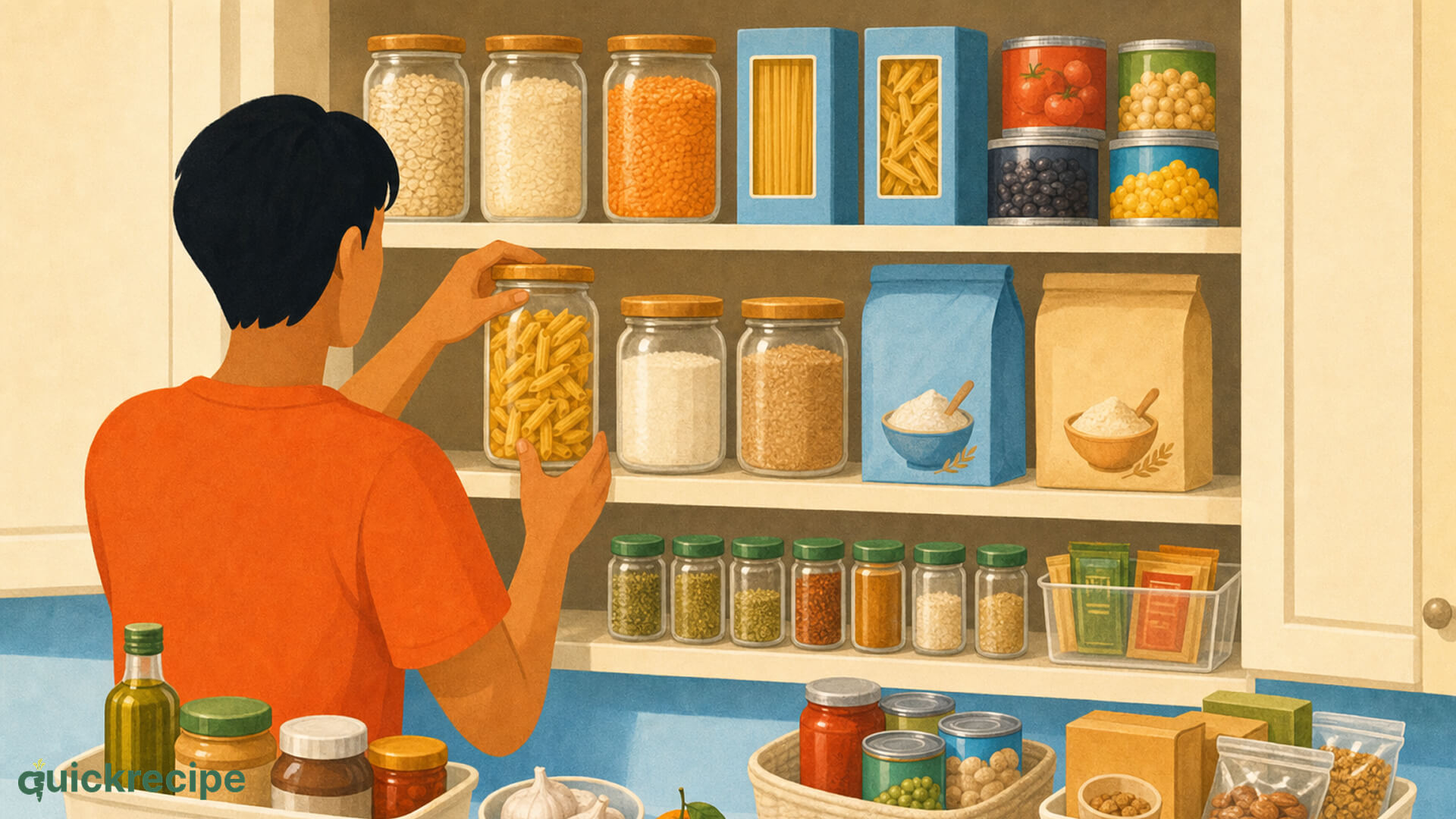
Put back only what you’re keeping, in clear zones:
- Daily basics: pasta, rice, grains, oil, salt, spices.
- Proteins and legumes: canned tuna, canned beans, eggs (in the fridge), tofu, etc.
- Veggies and aromatics: fresh in the fridge, frozen in the freezer, dried herbs together.
- “At risk of waste”: one zone or container for everything that should be used within a few days.
The goal isn’t magazine aesthetics: it’s seeing what you have in 3 seconds when you get home from work.
3. Turn clutter into dinner (5 minutes)
Take 3–6 ingredients from the “cook this week” pile and decide the first meal right away. You don’t need a perfect recipe—you need a concrete plan, like “tonight I’ll use zucchini, eggs, and rice.”
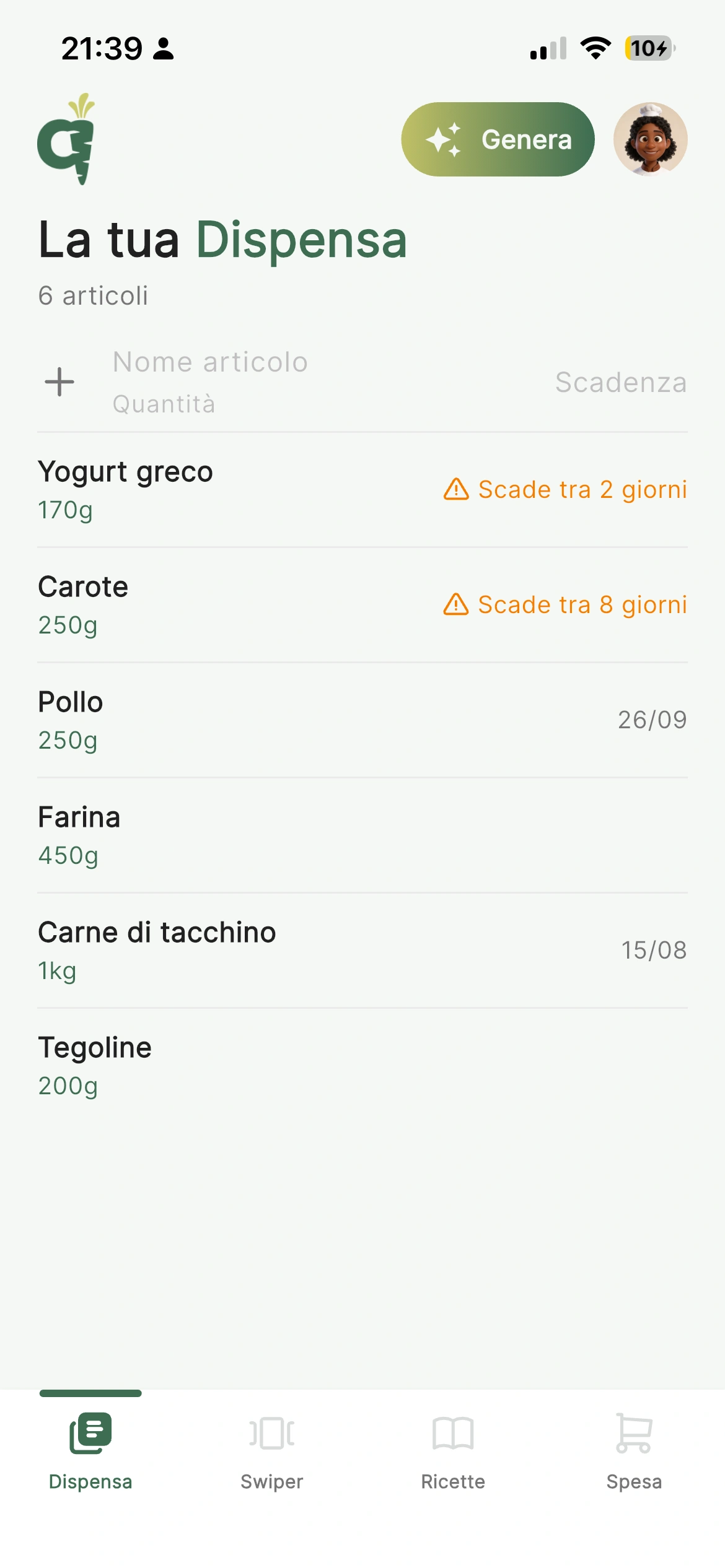
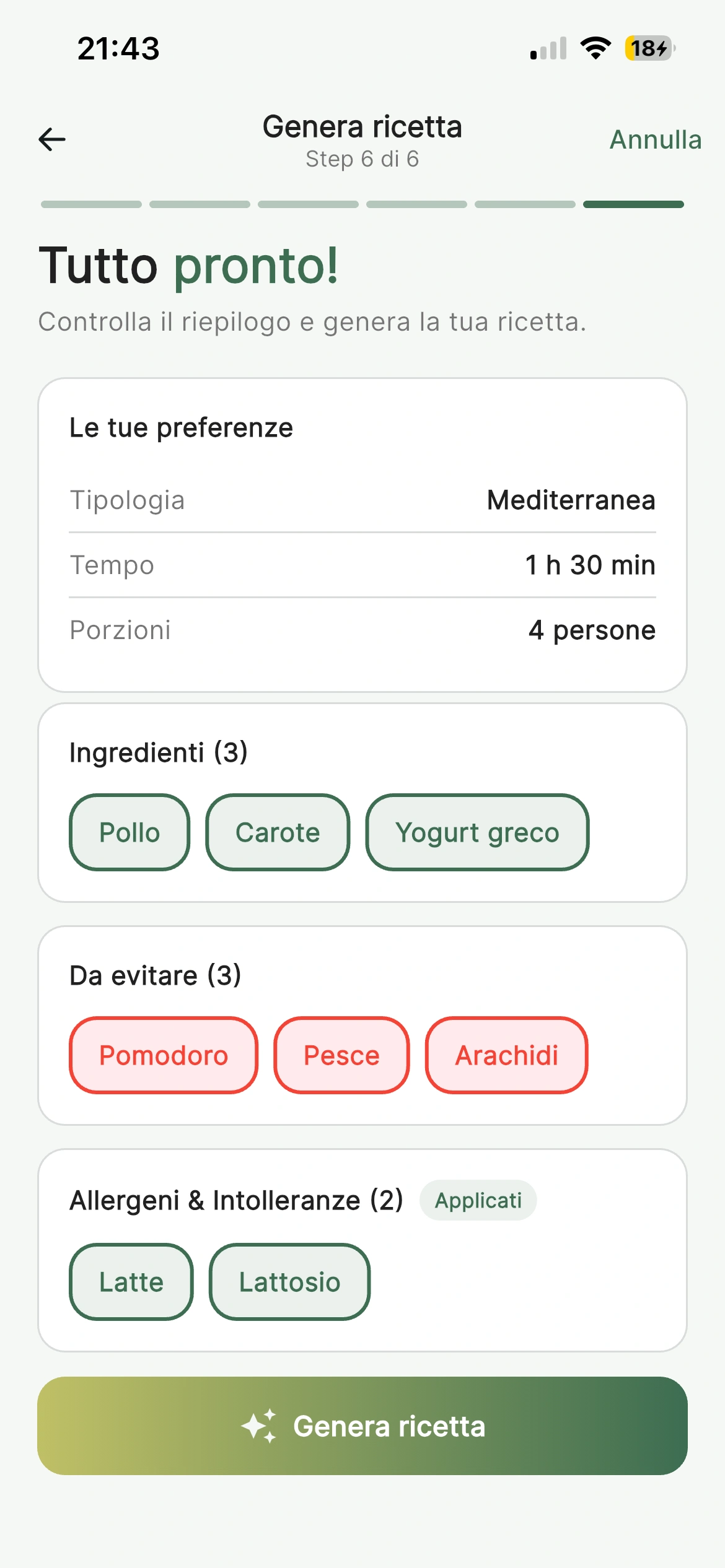
If you don’t know how to combine them, this is where an app like QuickRecipe helps: enter your real ingredients and get recipes with doses and steps, without inventing everything alone.
Mini checklist to save
- Do I have a “use within 3 days” zone?
- Are pasta/rice/legumes visible, not hidden behind empty jars?
- Are spices and oils in one place?
- Do I already know what I’m cooking tonight with what I pulled out?
After 15 minutes: keep order without effort
- When you shop: buy only if you already have a use in mind (or if it’s a basic staple).
- When you get home: put new items in the right zone immediately—not “later.”
- Once a week: 5 minutes of reset on the waste-risk zone.
Organizing your pantry isn’t an endless project: it’s a short habit that gives you time back every evening. With a readable pantry and a tool that turns ingredients into recipes, cooking becomes simpler, faster, and less wasteful.