AI in the kitchen is not (yet) a chef
In recent years, artificial intelligence has entered the kitchen too: it generates recipes, suggests swaps, calculates portions and nutritional values. For people who cook every day, though, the useful question isn’t “is it impressive?”—it’s: does it actually save time and stress in real life?
The answer is yes—if you use it for the right problems and know its limits.
Real benefits for everyday cooking
1. Less “what’s for dinner?”
The mental block of inventing a dish after a long workday is one of home cooking’s hidden costs. An AI that starts from ingredients you already have reduces that decision load in seconds.
2. Less waste
If you have half a pepper, a can of chickpeas, and leftover rice, AI can suggest a concrete use instead of letting them spoil. It’s not just “creativity”: it’s making the most of shopping you’ve already done.
3. Personalization without endless searching
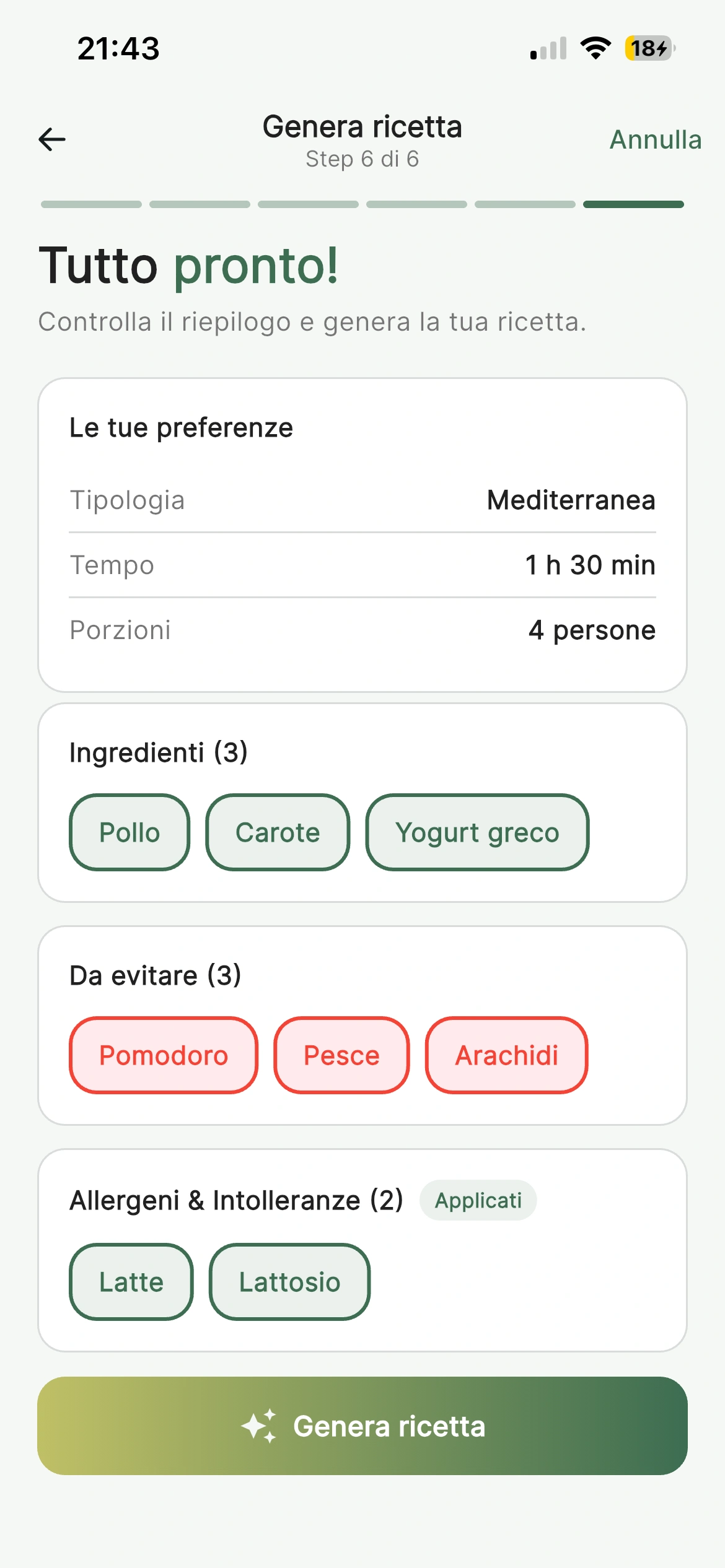
Diets, allergies, intolerances, available time, number of servings: filtering recipes online by hand takes minutes (or hours). A good tool applies those filters automatically and shows only compatible options.
4. Complete recipes, not vague ideas
An ingredient list isn’t enough. You need doses, steps, and a sensible order. This is where AI helps: it turns “I have these things” into a cookable procedure.
5. More variety with the same staples
With the same 8–10 basic ingredients, you can get different dishes across the week—without suddenly becoming an improvised chef.
Limits to know (so you don’t get disappointed)
1. It doesn’t replace your taste
AI proposes; you choose. If you dislike cilantro or hate zucchini, set that—otherwise you’ll get suggestions that are “technically fine” but useless for you.
2. It doesn’t know the real quality of your ingredients
An app doesn’t know if the chicken is fresh today or if the vegetables are already a bit limp. You remain the final judge of quantities, cooking, and common sense.
3. It isn’t a clinical nutritionist
Estimated nutritional values help awareness, but they don’t replace a personalized meal plan from a specialist—especially if you have medical conditions.
4. It can oversimplify (or overcomplicate)
Sometimes it suggests “cookbook” steps or ingredients that aren’t practical on a Tuesday night. Better tools are built for real kitchens: few steps, clear timing, common ingredients.
5. It depends on good input
If you enter vague or incomplete ingredients, the result will be generic. The more precise you are (“cooked basmati rice,” “zucchini,” “eggs”), the more useful the recipe.
How to use it well (practical method)
- Start from the fridge, not from Pinterest.
- Set strong constraints: time, diet, allergies, what to avoid.
- Pick a “good enough” recipe and cook it, instead of scrolling forever.
- Save what works and repeat winning formats on busy days.
Where QuickRecipe fits
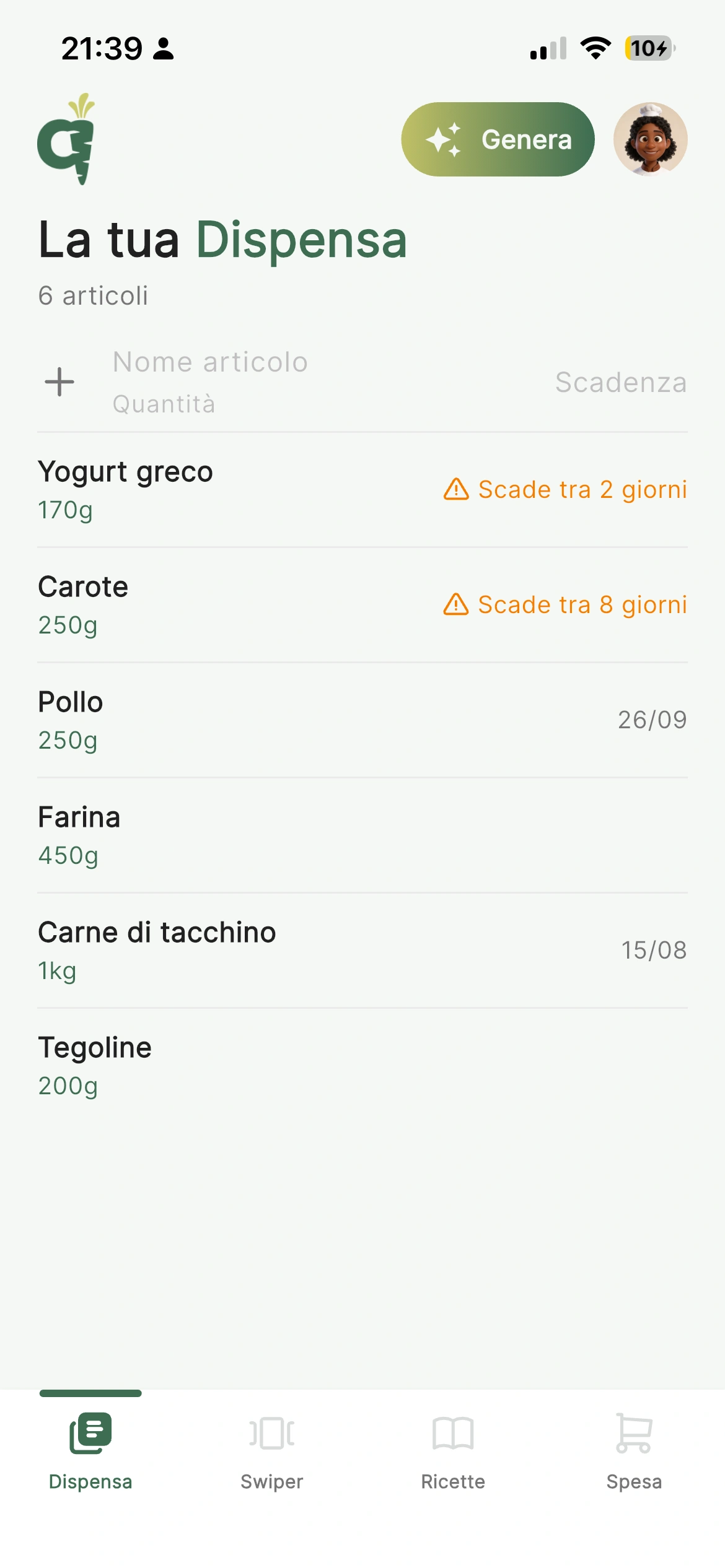
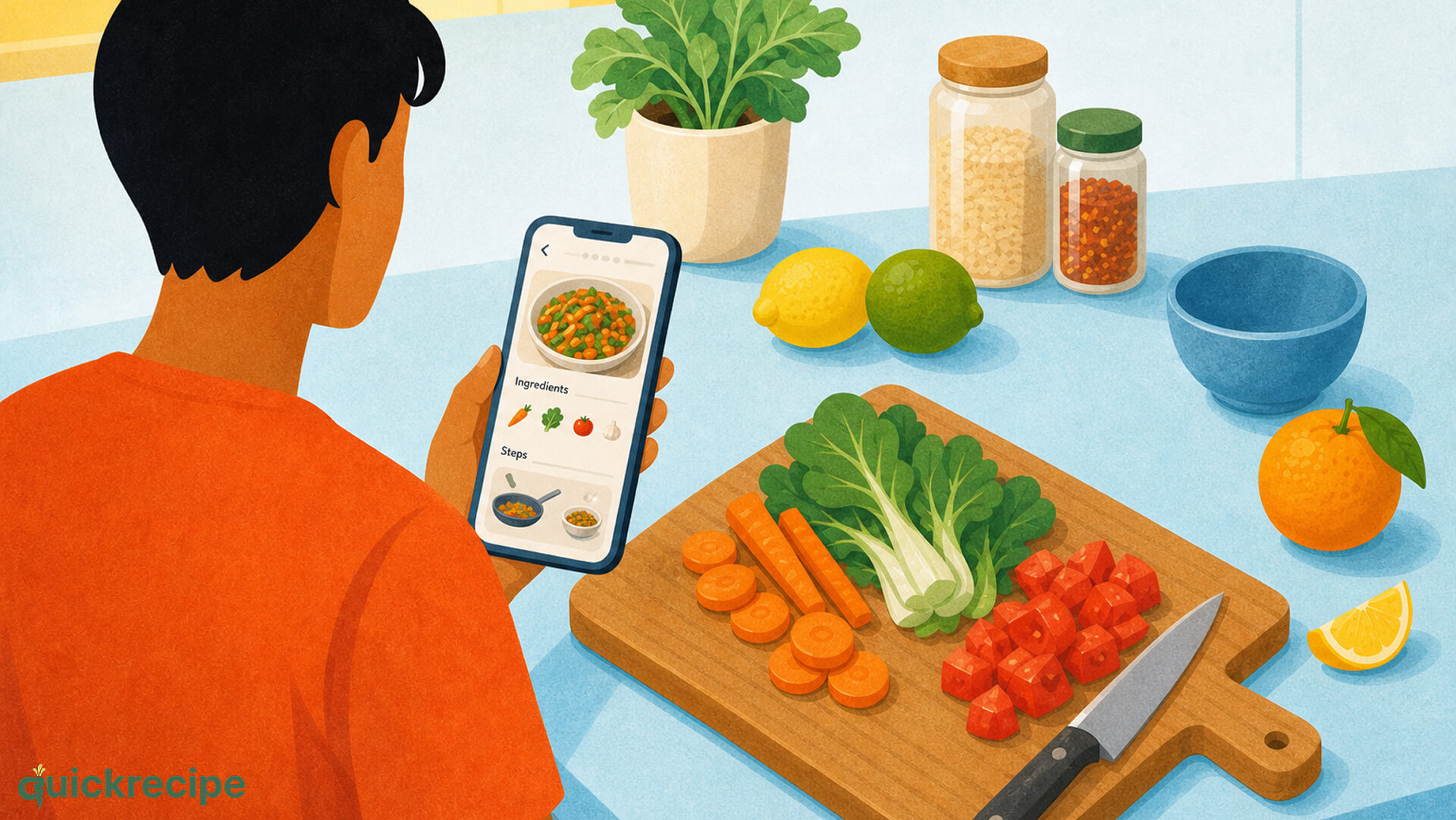
QuickRecipe is built for this everyday use: enter the ingredients you have, time, and preferences, and get tailored recipes with steps and nutritional values. It doesn’t promise magic: it reduces decisions, helps you use what you already have, and respects the constraints you set.
AI in the kitchen works when it becomes a practical assistant—not an oracle. Used that way, it gives you back time, variety, and less waste, while leaving taste, quantities, and common sense in your hands.